


As the dust settles post-election, one of the biggest questions on everyone’s mind is: What does this mean for the markets and the economy? Regardless of who we vote for, history shows that markets function better with predictability.
Clearer Expectations Fuel Confidence
Elections remind us that the market is a forward-looking instrument. Now that corporations have a better understanding of what policies might shape the economy, the markets react accordingly. As agendas become clearer, corporations can begin planning for the future.
There’s goodness in this certainty. Regardless of who you vote for, a decisive outcome means more clarity which allows the markets to more accurately project.
A Few Encouraging Visuals
While no one has a crystal ball, we get the best view of the future by zooming out looking at the past. In this case, a picture is worth a thousand words–or however long it would take to explain this…
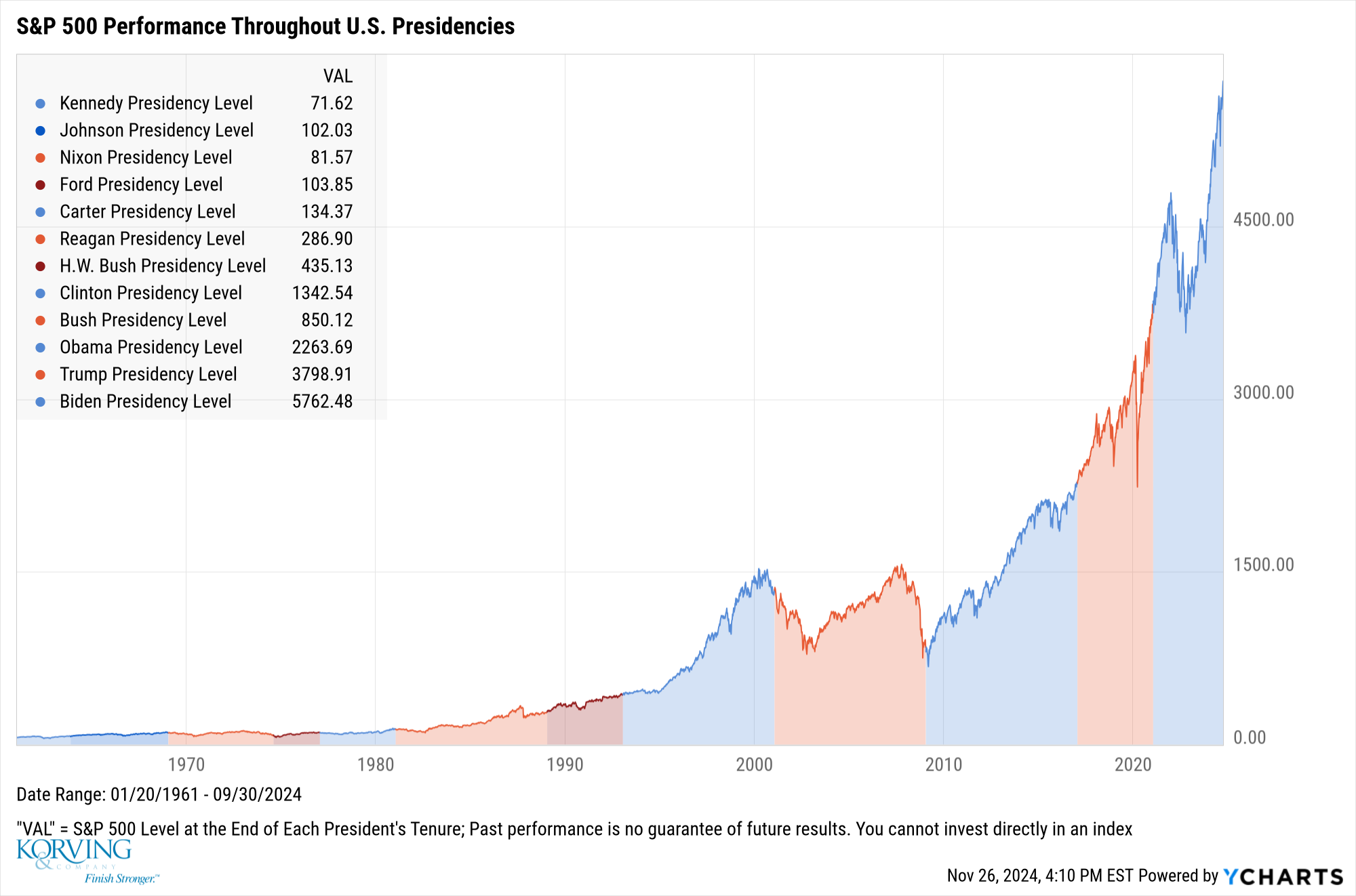
The first chart encourages us to remember that the stock market is much more dependent on the ingenuity and grit of the American economy than on any president. While we remain vigilant, we have a high degree of confidence in our economic system's continued power.
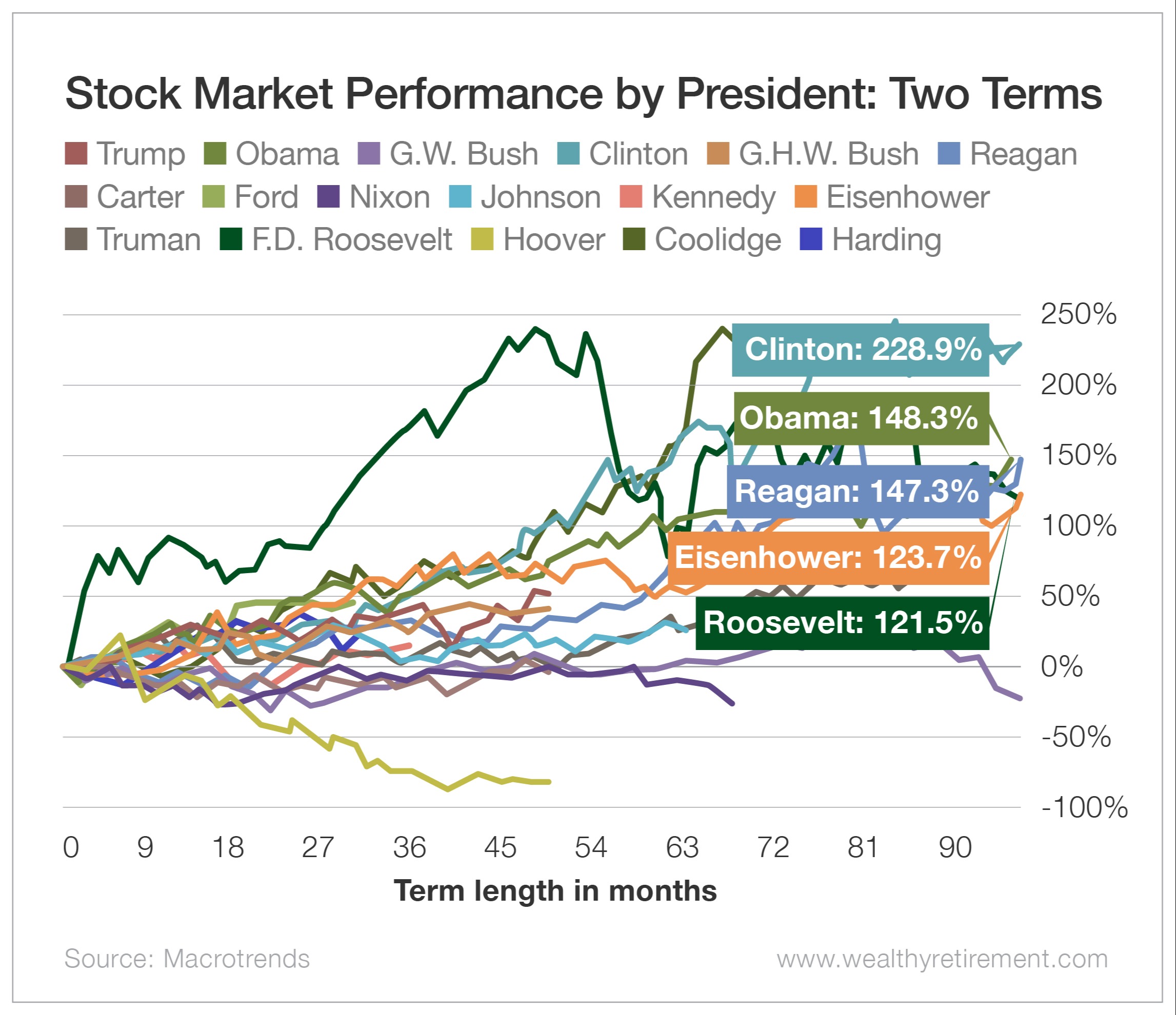
Stock Returns by President from Wealthy Retirement
Seen a different way, the public markets have a shockingly consistent history of trending the right direction. (Minus Hoover and that little chapter called the Great Depression.)
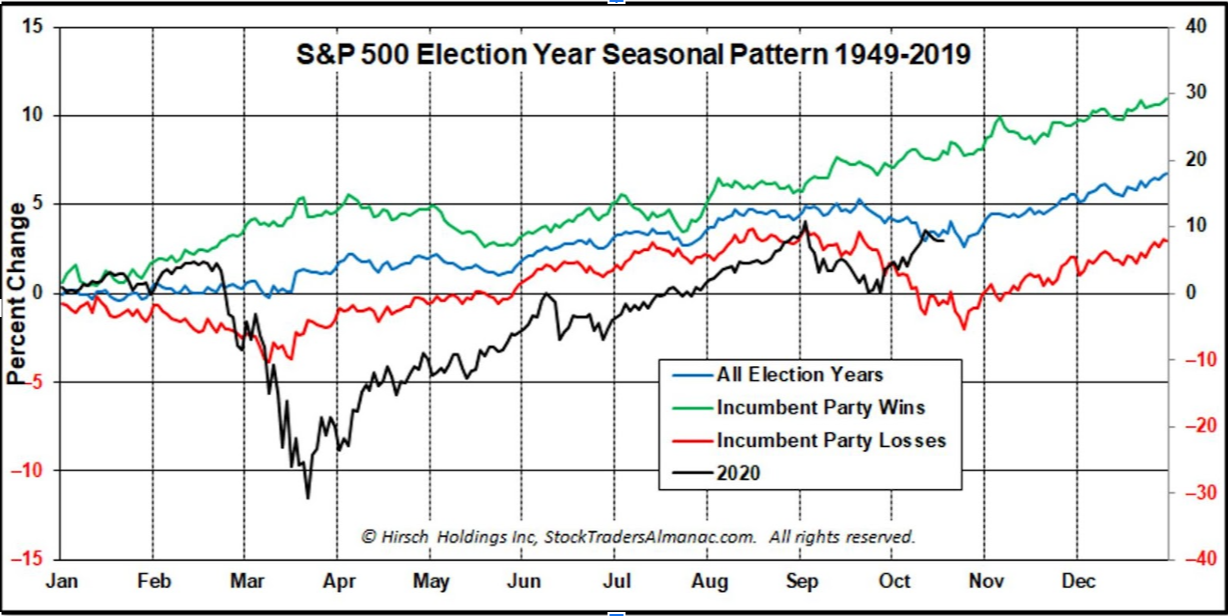
Election Years Based on Incumbent Outcome from Stock Charts
This chart tells an interesting story, though a minor one compared to the macro picture. produces more investor confidence.
Markets tend to have a slightly better performance when an incumbent president wins a second term. Does this matter in your overall investment strategy? No, but we found it a bit entertaining.
The Markets Have Confidence, Do You?
While we work to study and follow changes in the economy, we can approach it with a degree of confidence that the economy is stronger than any one president. That’s good news for our financial plans.
If you have questions about how these shifts might impact your financial goals or investment strategy, feel free to reach out. Together, we can navigate these changes and plan for what’s ahead.